The Car That Taught Me How to Decide

$8,000, low kilometres, and one word in the contract I should have asked about.
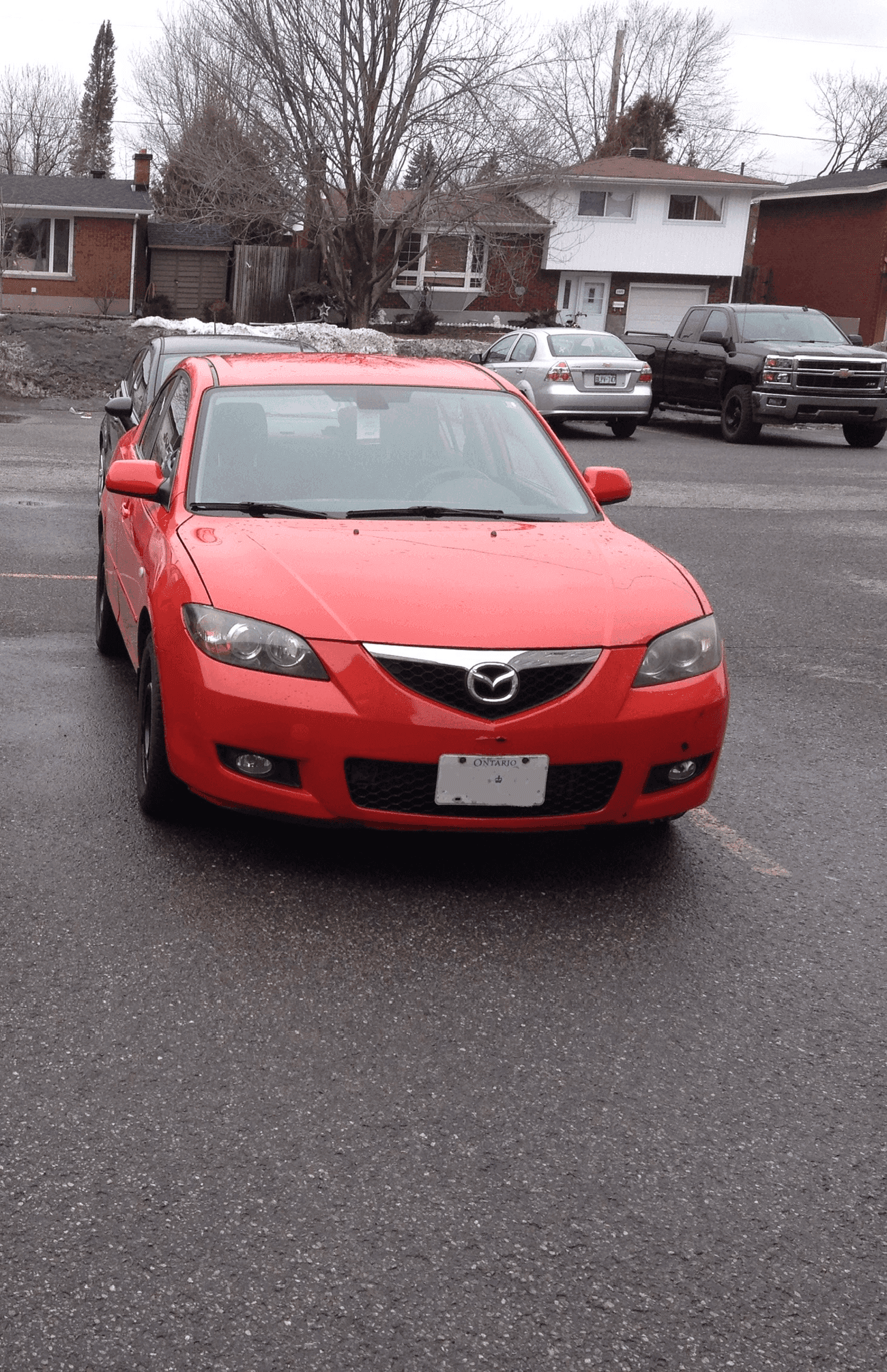
In 2014 I bought my first car. Technically it was my second, the first had been a gift from my parents, but this was the first one I paid for myself. I had a tight budget and I wanted something small. Maybe something sporty. After a few weeks of searching I found it. A 2008 red Mazda 3. The price was hard to believe, $8,000 when comparable cars were going for well over $12,000. I couldn't pass it up.
Sarah, my girlfriend at the time and my wife now, and I hopped on a bus to go see it. The garage only had room for six cars, and the red Mazda sat at the end of the row. We found a salesperson and asked for a test drive. I loved it. Mazda's zoom zoom slogan is not just marketing. It was a blast to drive! In terrible negotiating fashion, once we got back to the garage, I offered full price and we made a deal.
Some might call that decision hasty. In hindsight, it was. A few days later I picked up the car and drove off the lot. What I hadn't been proactive about was insurance. We had a temporary slip to get us home and two weeks to sort out a real policy. During the signing, the dealer had used the word "rebuild" a few times. It didn't mean much to me then. It meant a lot to the insurance agent who called a few days later.
The car had been in an accident and had once been written off. The contract I'd signed waived any liability the garage had for that. They'd rebuilt the car from a wrecked state and sold it to me without a second thought. Insurance companies do not look kindly on that kind of car. The cheapest policy I could find was a high risk plan, $3,000 a year.
I was upset. I felt cheated, and a little helpless. Regret is a heavy thing to sit with.
Then I decided to commit and move on.
I couldn't change what had happened, but I could still decide how I responded to it, and that part was mine.
What I didn't realize at the time was that the original decision hadn't been as reckless as I thought. Or maybe I just like to tell myself it hadn't been reckless. I'd been searching for weeks, and this was the best option by a wide margin. It looked too good to be true (and maybe that was partially true). The car was something in my price range. It was low kilometres and drove very well. It checked all the boxes.
Without knowing it, I had used something called the optimal stopping rule.
Algorithms to Live By describes optimal stopping as a way to solve exactly this kind of problem: spend the first 37 percent of your search purely gathering information, then commit to the very next option that beats everything you saw in that window.
I'd been doing this instinctively for years before I ever read about it.
This shows up constantly at work. My team and I are regularly faced with architectural decisions that come with real tradeoffs. If you already have every option laid out in front of you, the decision is just weighing pros and cons. Reality is rarely that tidy. There are usually unknowns that take real time to uncover, and it's easy to end up in analysis paralysis, waiting to know everything before deciding anything. Mapping out every option can take longer than the project itself. The optimal stopping rule gives you permission to explore just enough, then act.
Of course in my situation, it might have helped to understand what it meant to have a branded car title, but the Mazda turned out fine. I drove it for four more years. I still don't know exactly what the previous owner did to write it off, and at this point I've stopped asking.
Source: Brian Christian and Tom Griffiths, Algorithms to Live By: The Computer Science of Human Decisions (Henry Holt and Co., 2016).
The thoughts and views expressed here are my own.
Subscribe for updates
New posts in your inbox now and then. No spam; unsubscribe anytime.
If you are looking for comments, you won't find them here, but I'd still love to hear your opinion. Send me an email or message me on social media.