Trying to Find My Identity in the Era of AI
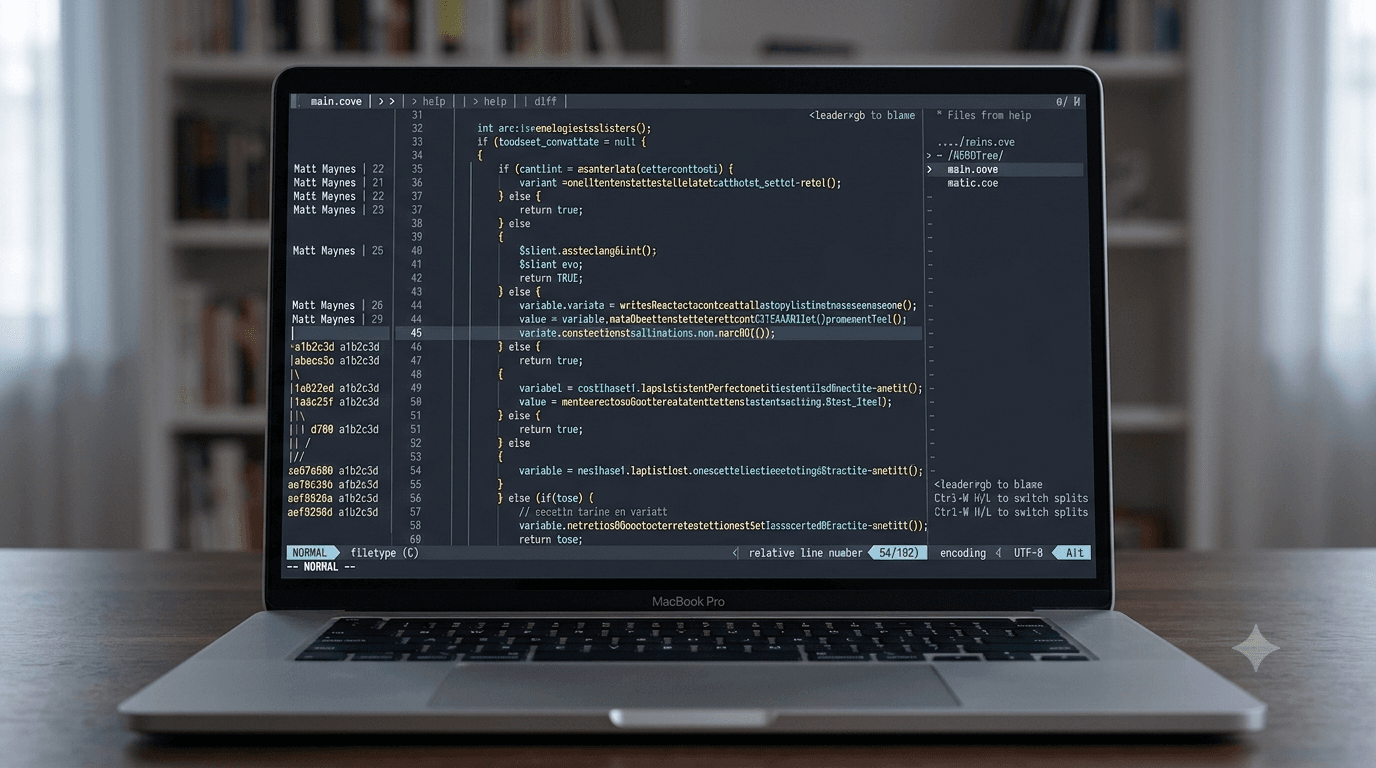

Same desk, same code, a job that quietly changed underneath me.
What is this ChatGPT thing?
In early 2023, I was sitting in the car in the parking lot, killing some time, reading an article on my phone. A headline on Hacker News caught my attention. There was this new thing called ChatGPT where users could chat with AI to ask questions. Up until this point, I knew machine learning as models that you trained with weights on a data set and used to classify outputs. I didn't yet understand generative models and I certainly did not grasp the gravity of what this meant for me or the world. I thought the article was interesting, that users would just chat with this AI, but I didn't really see the point, and I moved on.
A couple months later, I was talking to a friend and he asked if I'd tried ChatGPT. I said that I'd heard of it but didn't understand the value. He told me to try it. So I gave it a go. The concept started to make more sense. I could get much more specific answers to questions I was asking than generic Google results could give me. Now I understood that it was essentially a better search engine.
A few more months went by and now it's 2024, the game was starting to change. I started noticing fake images popping up online and every company I knew had "integrate AI generation" in their roadmap. Some developers I knew were now starting to use it for their code development for small tasks. I still didn't understand the gravity of the impact at this point. I think I was embarrassingly late to the party.
It wasn't until December 2025 that I heard about Claude Opus and spec-driven development. And finally in January of 2026, something clicked. I realized the profound impact AI was having on my career and life.
Going down the rabbit hole
I want to be clear, it wasn't that my head was in the sand and I didn't see this coming. But I hadn't truly experienced the feeling of the AI shift until that moment. It felt like my world flipped upside down. For all of my career, I've prided myself on "my craft". I cared deeply about abstractions, modularization, and separation of concerns. I prided myself on a functional style of programming, minimal loops, avoiding procedural code. I even cared about visual nits like tabs vs spaces or the curly brace { being on the same line as the if clause. And then, none of it mattered.
Well, maybe not none, but a significant portion of the value of my craftsmanship didn't matter. I had a bit of an identity crisis for a few weeks while I grappled with the question of what software engineering even was anymore. With some help from a mentor, I was pointed in the direction of being a product engineer instead. Not worrying about the software itself, worrying about the outcome, about the value I produce. I bought in, hard. I turned the dial to 11 and went all in on spec-driven development. With a small team of talented engineers we built an entire social media coaching and scheduling product in just a few weeks. It blew my mind with what was possible now. It seemed like software was basically free now.
And then, we got a budget. I hadn't been paying attention to how much I was spending, and AI was expensive. I was eating up over $2,000 a week in tokens (tokens in AI speak are basically just "words") and burning them like there was no tomorrow. Then one day I came to work and was told that I only get $45 a week. What am I supposed to do?
The hangover
I finally poked my head out of my hole. I forgot how to do the thing I'd been doing my whole career, write code. Identity crisis round 2. It's as if I'd been walking around my whole life when someone came along and showed me how to drive, then gave me a Ferrari for a few months, just to drop me off on the side of the road with a pair of roller blades and say "there ya go, get yourself to the next town".
I had to figure out how to cope with the smaller budget. It was a very abrupt realization that abundance had made me lazy. I was using tokens like they were unlimited. Having strict limits forced me to be more frugal. To actually pause and ask myself if I could just do the task I was about to ask AI to do. Is this thing worth spending my tiny budget on?
It wasn't long until the consequences of my reckless abandon for AI caught up with me. As I started to look around the codebase more closely, I'd see stacks of conditionals 4 or 5 layers deep and wonder who wrote it, only to find out that I was the one on the git blame. I had let AI write the code and AI review it. I didn't even know how it worked. The real heartache of my actions came when a respected peer told me that a sign off on code from Matt Maynes used to be a stamp of quality, but not any more. That stung. Not because of how pointed it was (I mean, that stung too) but because he wasn't wrong.
Who am I now?
This catches you up to the present. This is an evolving story and I'm still grappling with what identity I will hold next. I don't think my craft is dead, but it is certainly not the same. Not that I don't care anymore. Rather, I work in an industry that has moved past it.
The new currency of value is velocity and delivering software to users as fast as possible. In all the hype, I certainly tipped the scales too far towards output and forgot about longevity. To everything in life, balance is key. For me, the scales are still in flux and I'm trying to find the balancing point.
I don't know what the future holds for how I write software or how I do my job, but I'm excited to find out. As AI reshapes knowledge work around the world, I can't change how it impacts me, but I can change how I respond. I'm working hard to figure out how to be an effective engineer and an effective leader through this change. I won't pretend I have all the answers, but I'll keep working through it, and writing about it as I go.
The thoughts and views expressed here are my own.
Subscribe for updates
New posts in your inbox now and then.
If you are looking for comments, you won't find them here, but I'd still love to hear your opinion. Send me an email or message me on social media.